










5 simple morning habits that help extend your lifespan.
Th7 27, 2022

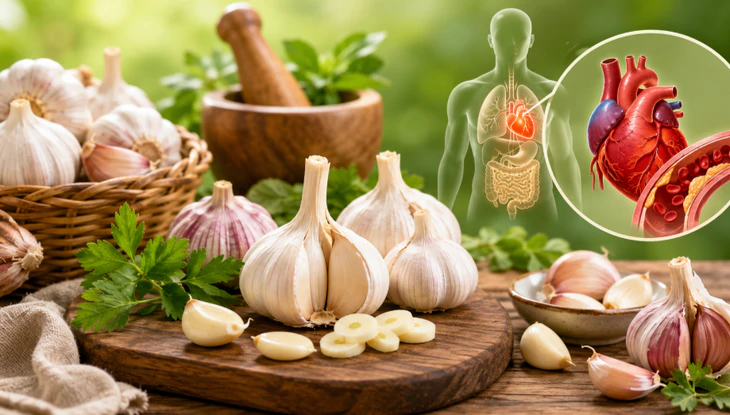
Garlic is not merely a familiar culinary ingredient; it is also a medicinal herb that has long been used in the traditional medicine of various countries, including Vietnam. Modern research has shed light on its many beneficial properties…
In the kitchens of most Vietnamese households, garlic is an almost indispensable ingredient. However, few people realize that for centuries, garlic has been classified as a “dual-purpose food and medicine”—serving as both a foodstuff and a medicinal remedy.
Garlic (*Allium sativum* L., Amaryllidaceae family) contains essential oils rich in sulfur compounds such as alliin, allicin, ajoene, and various diallyl sulfides.
When garlic cloves are crushed or chopped, the enzyme alliinase converts alliin into allicin—the active compound responsible for garlic’s characteristic odor and believed to provide numerous biological benefits.
In traditional medicine, garlic is characterized as having a pungent taste and a warming nature; it acts upon the Spleen, Stomach, and Lung meridians. Its therapeutic functions include warming the middle burner (digestive system), promoting the flow of *qi*, resolving accumulations, detoxifying, and acting as an antiseptic. Consequently, garlic is used in various remedies to treat conditions such as the common cold, bloating, poor digestion, boils, and certain skin ailments.
Modern research has confirmed that garlic possesses antibacterial and antioxidant properties and supports cardiovascular health. However, garlic is not a substitute for medical treatment.
1. Garlic for colds and coughs caused by “wind-cold”
According to Traditional Oriental Medicine, the common cold occurs when “wind-cold” pathogens invade the body, obstructing lung *qi*. Patients typically exhibit symptoms such as aversion to cold, nasal congestion, coughing, minimal sweating, and headache. Due to its warming nature and pungent taste, garlic is used to dispel wind-cold, warm the body, and clear the respiratory tract.
Reference remedy: Garlic steamed with rock sugar (using 3–5 fresh garlic cloves and 15–20 g of rock sugar).
Preparation: Peel and crush the garlic cloves, then steam them with the rock sugar (using a double-boiler method) for approximately 15 minutes; strain the liquid and drink it while warm.
Traditionally, this remedy is used at the onset of a cold, or for coughs and mild sore throats caused by cold exposure. Laboratory studies have shown that allicin possesses antibacterial and antiviral activity. Some reviews indicate that garlic preparations may help reduce the risk of catching a cold or shorten the duration of the illness.
2. Relief for bloating, indigestion, and slow digestion
This is one of the oldest medicinal uses of garlic in traditional medicine. According to Eastern medicine principles, garlic warms the middle burner (spleen and stomach) and promotes the circulation of *qi* (energy) in the digestive tract, thereby helping to alleviate bloating, gas, and indigestion caused by coldness.
Suggested remedy: Garlic porridge made with 50–60g of plain rice, 3–5 cloves of garlic, and a little fresh ginger.
Preparation: Cook the rice until soft; add roasted garlic and ginger when the porridge is nearly done, and consume while hot.
In Eastern medicine, this dish is suitable for individuals suffering from indigestion, a “cold” stomach, or poor digestion following exposure to cold. Sulfur compounds in garlic have demonstrated the ability to inhibit various gastrointestinal pathogens in laboratory settings. However, consuming excessive amounts of raw garlic may cause stomach irritation, heartburn, or diarrhea in some people.
3. Support for preventing intestinal infections
Garlic is classified as a remedy with detoxifying and antiseptic properties, often used in cases of consuming unsanitary food or suspected intestinal infection. Modern research has demonstrated that allicin possesses a broad antimicrobial spectrum against various strains of bacteria and fungi in laboratory tests.
Suggested remedy: Vinegar-soaked garlic—combine 200g of peeled garlic with 500ml of rice vinegar; let it steep for 3–4 weeks, then consume small amounts with meals.
Traditionally, this method is considered beneficial for digestion and the prevention of intestinal ailments. *In vitro* studies indicate that allicin can inhibit various bacteria—such as *Escherichia coli*, *Salmonella* spp., and *Staphylococcus aureus*—as well as certain fungal species.
4. Support for cardiovascular and circulatory health
Unlike many medicinal plants used solely based on folk tradition, garlic is one of the few traditional remedies that has been extensively studied for its effects on cardiovascular health.
In traditional medicine, garlic is valued for its ability to promote the movement of *qi* (vital energy) and blood circulation; it is therefore used to treat conditions involving blood stasis, chest pain/tightness, or a “cold” constitution that impedes the flow of *qi* and blood.
Meanwhile, modern medicine focuses on the effects of sulfur compounds, particularly allicin and ajoene. Systematic reviews indicate that garlic preparations may help modestly lower total cholesterol, LDL cholesterol, and blood pressure in certain populations. However, these improvements are generally moderate, and garlic is not a substitute for prescribed medication.
Suggested remedy: Garlic tincture made from 40g of peeled, dried garlic and 100ml of clear alcohol (35–40% ABV).
Preparation: Slice the garlic and steep it in the alcohol in a glass jar for 10–15 days until the liquid turns pale yellow. According to folk tradition and some modern Eastern medicine texts, small amounts are consumed after meals to support blood circulation and digestion.
Note: Individuals with hypertension, liver disease, or those who are pregnant or taking anticoagulants should not use this remedy without consulting a healthcare professional.
5. Supporting the treatment of boils and insect bites
In Eastern medicine, garlic is considered to have a warm nature and a pungent taste, offering detoxifying and antiseptic properties; it is thus used topically on newly forming boils or insect bites.
Suggested remedy: Diluted garlic solution—crush garlic, add cooled boiled water, and strain to extract the liquid; use this to wash the affected area, as recommended by folk tradition. Unlike in the past, experts today do not recommend applying fresh garlic directly to the skin, as numerous reports have documented cases of chemical burns, contact dermatitis, and blistering, particularly in children. If the affected skin shows signs of infection, swelling, heat, pus discharge, or spreading, the patient should seek medical attention.
6. Supporting individuals with a “cold” constitution and cold extremities
People with a “cold” constitution (specifically involving the spleen and stomach), poor appetite, and coldness in the abdomen or limbs often require warming remedies to restore *yang* energy. Garlic is frequently incorporated into medicinal dishes designed to warm the body.
Suggested remedy: Garlic-stewed chicken soup, made with one small free-range chicken, a whole bulb of garlic, fresh ginger, and seasonings to taste.
Preparation and use: Stew until the meat is tender and serve hot. According to Traditional Oriental Medicine, this dish is suitable for those recovering from illness, those with poor appetite, or those who frequently suffer from abdominal coldness or an aversion to cold. However, it should not be consumed by individuals with high fever, acute inflammation, or symptoms of “heat syndrome.”
7. Who should not use garlic medicinally?
Despite its many uses, garlic is not suitable for everyone; caution is advised in the following cases:
Individuals taking anticoagulants or antiplatelet drugs, as garlic may increase the risk of bleeding.
Individuals preparing for surgery should inform their doctor if they are using garlic supplements or products.
Individuals with gastric ulcers or severe gastroesophageal reflux disease (GERD) may experience increased irritation from consuming large amounts of raw garlic.
Individuals allergic to garlic or other plants in the *Allium* (onion/garlic) family should not use it.
Do not apply fresh garlic directly to the skin for extended periods, as this can cause skin burns. For chronic conditions such as hypertension, diabetes, dyslipidemia, or infections, patients must continue to adhere to their doctor’s prescribed treatment regimen. The use of garlic or traditional remedies should be viewed as a complementary measure rather than a substitute for proven medical treatments.

There is no single “secret” to longevity, but small lifestyle changes—if consistently maintained—can help reduce the risk of chronic diseases,...

Many people consider vitamin D and calcium an essential “duo” for preventing osteoporosis and fractures in old age. However, does routine supplementation...
Th7 27, 2022


(0) Bình luận
Viết bình luận